HOHNER
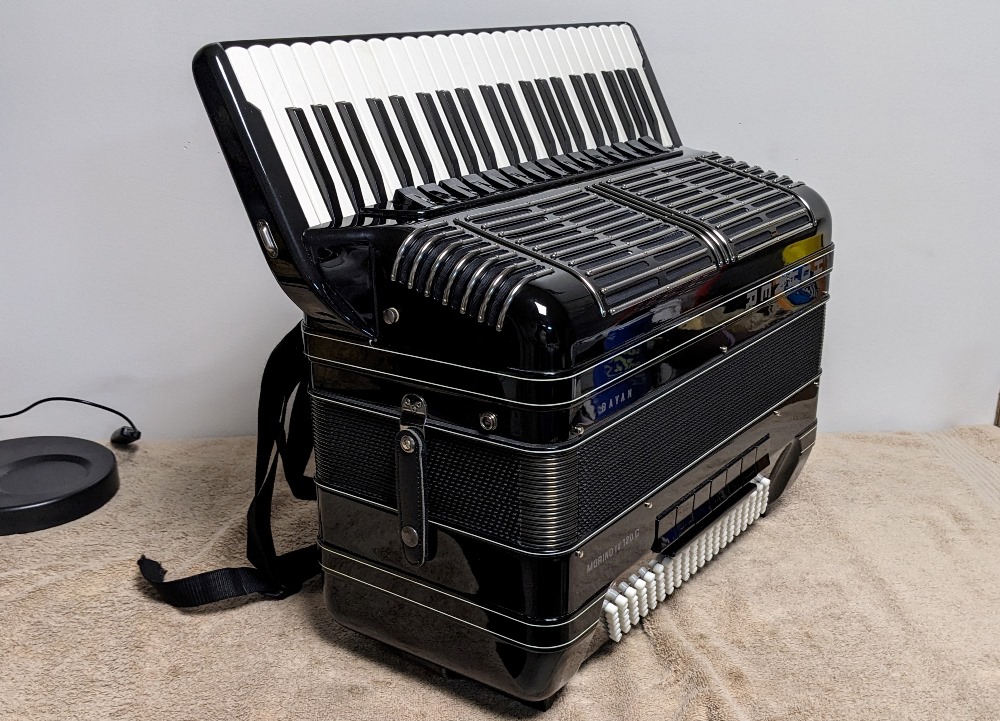
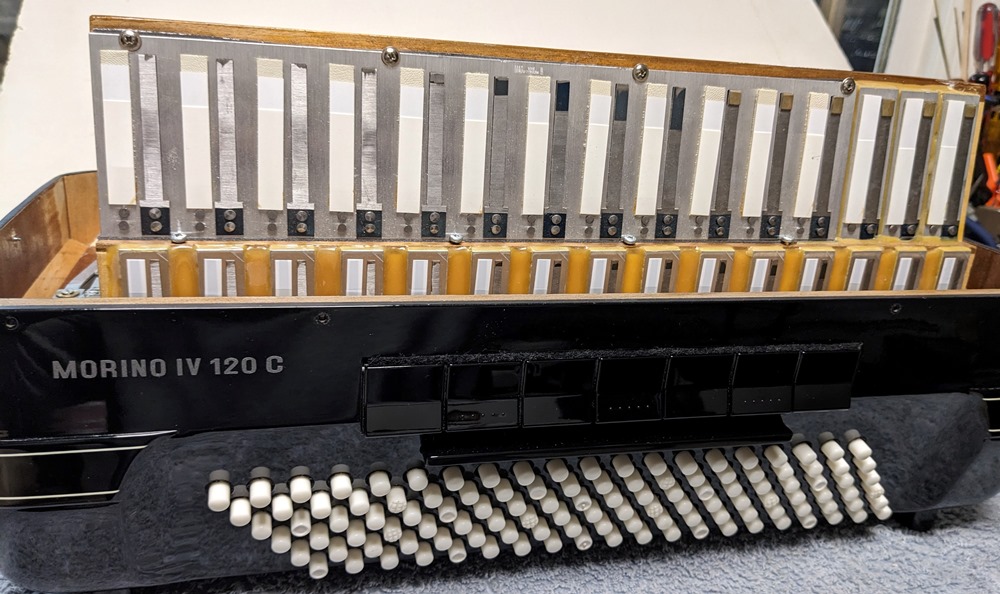
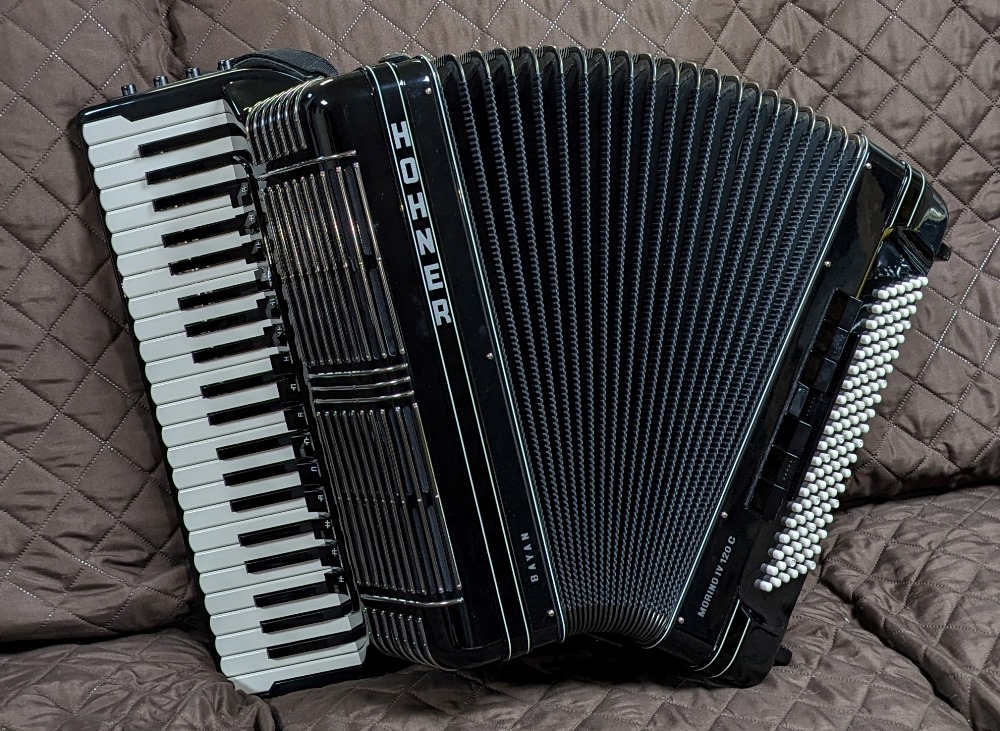
Morino IV 120 C Bayan - The Ultimate Concert Accordion
This
is a modern accordion that combines the tradition and time proven
practices with state of the art engineering. The Hohner Morino is the
second from the top in the Hohner line, right next to the famous Gola
model. It has
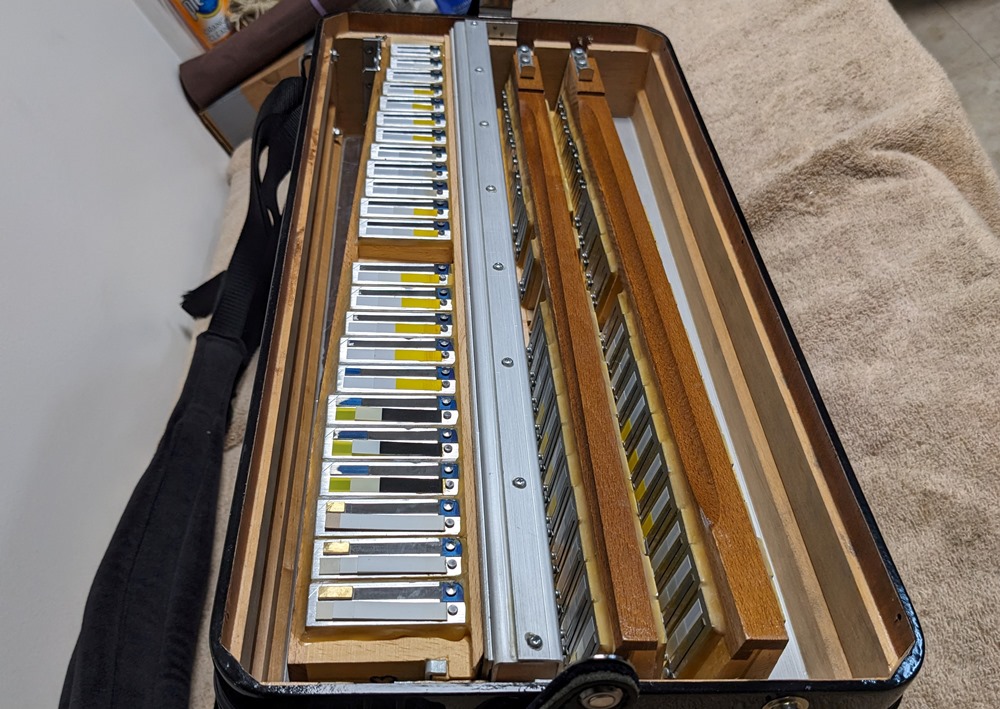
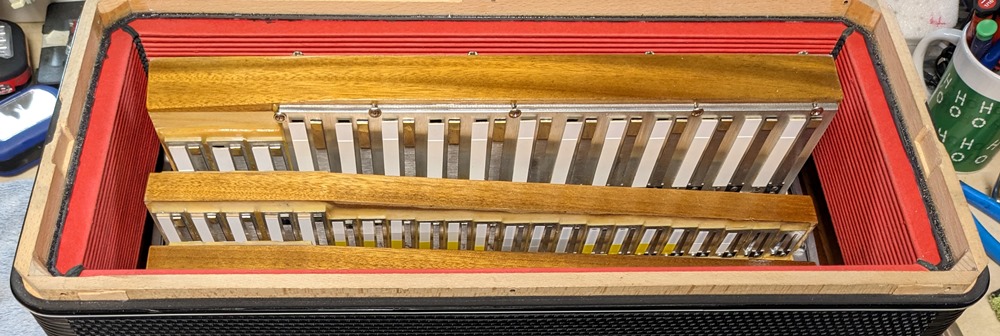
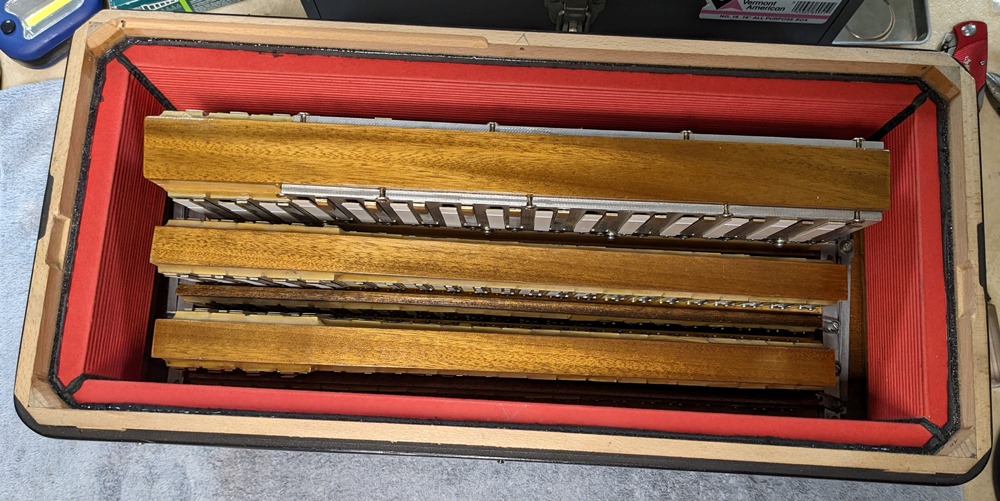
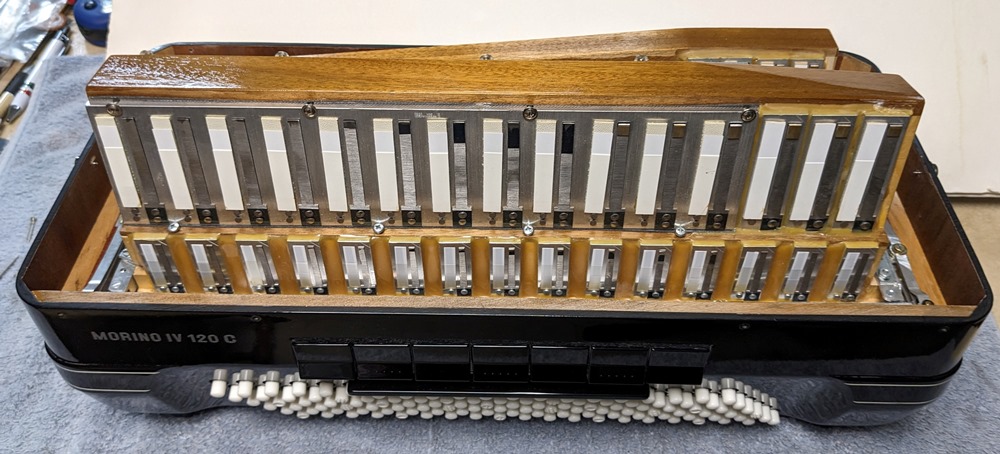
double tone chamber with excellent hand made reeds. This particular
instrument was custom made for the most demanding concert performers. It
features extended keyboard range E1-C5 and a free-bass converter
mechanics. You can play the standard preset bass/chords Stradella system
as well as single notes on all bass buttons (C-system chromatic
layout). The bass side covers 58 notes range (E1-C#5) in free-bass with the
dramatic rich low-E configuration. The dedicated low octave reeds from
the Bass and Tenor sets share common reed plates (as in the Russian
bayans) for enhanced resonances. There is a bass valves
decoupling shift next to the air valve that allows adding the highest
octave sopran reeds to the free-bass notes as well as the bass and
counter-bass rows in Stradella. This solves the problem with the
Transformer/Bassetti systems where you can use only 4 sets of bass reeds
in Stradella and can't have more than two reeds play in free-bass mode.
The
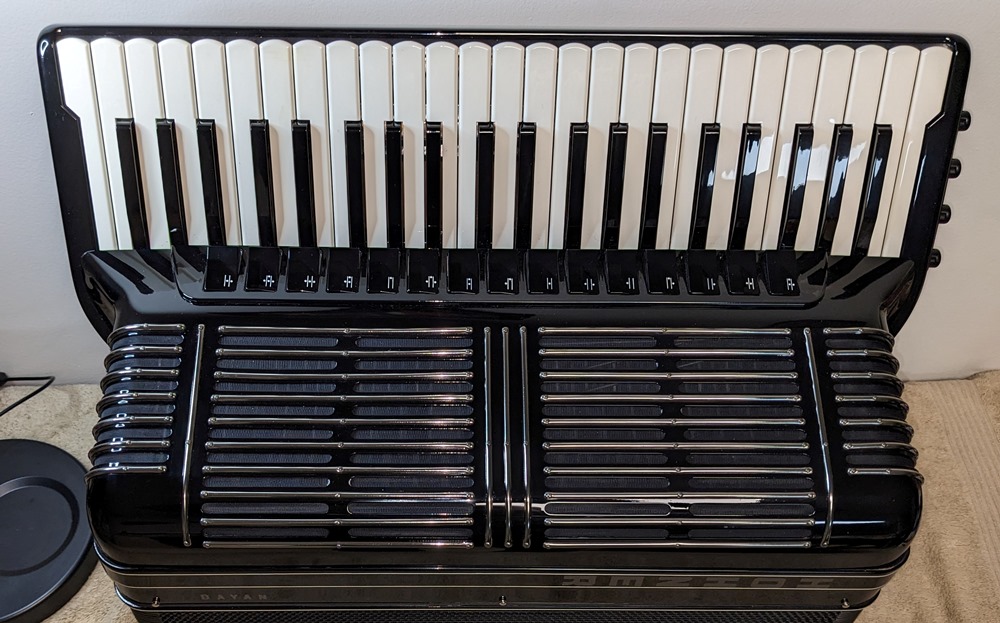
treble side gives you access to all possible reed combinations with 15
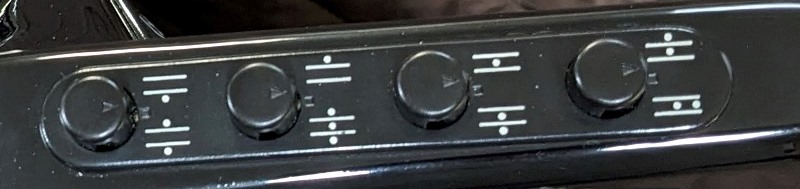
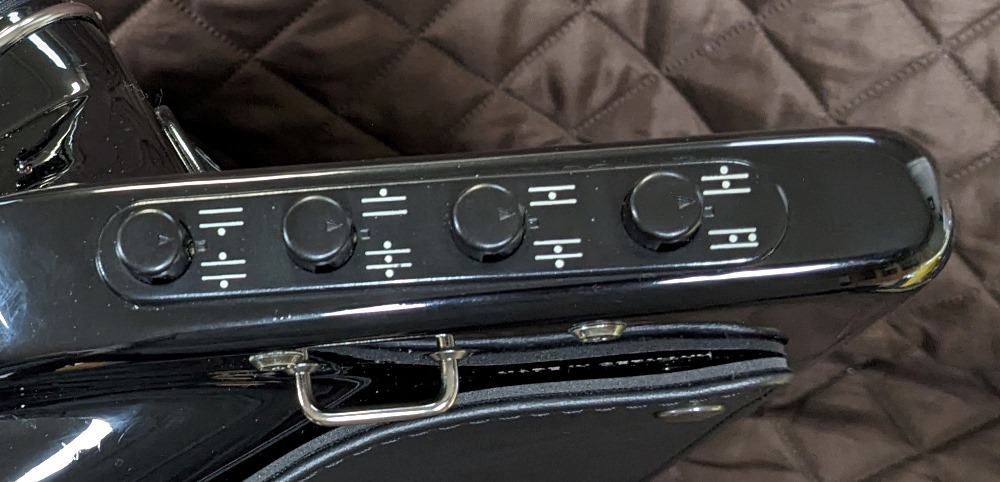
treble switches. In addition, there are 4 chin switches with a clever
design. Each of them has 3 positions - disabled/locked, and two possible
reed combinations when turned clockwise or counterclockwise. At any time
the performer has access to up to 4 out of 8 possible chin switch
settings. Please, see more details in the pictures area.
The
bass
plate is specially designed to keep the bass buttons closer to the body
of the player. This is a classic Morino feature.
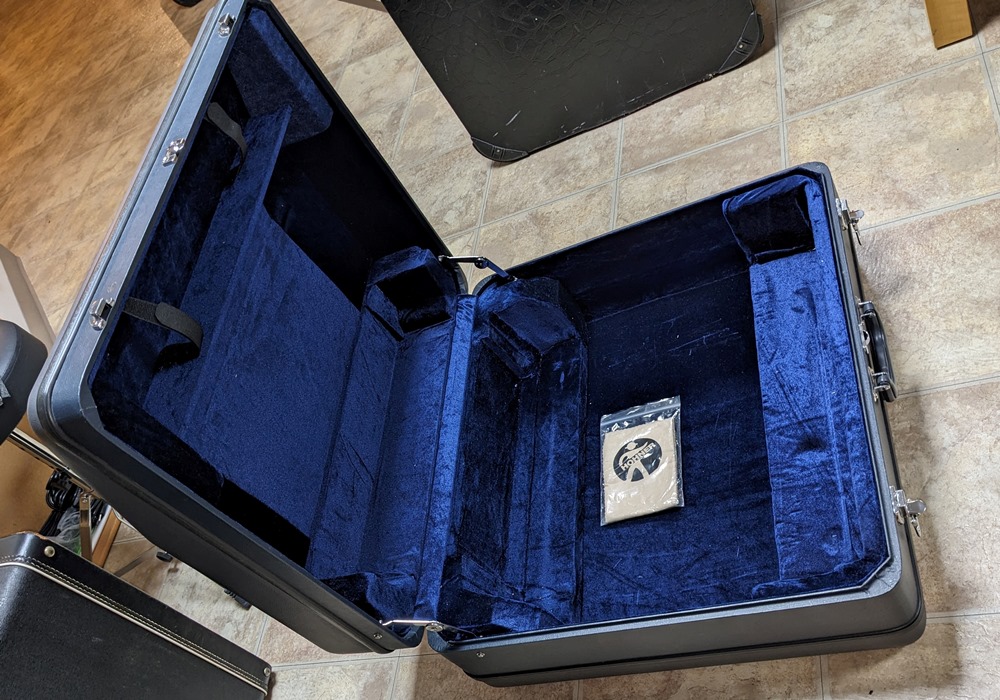
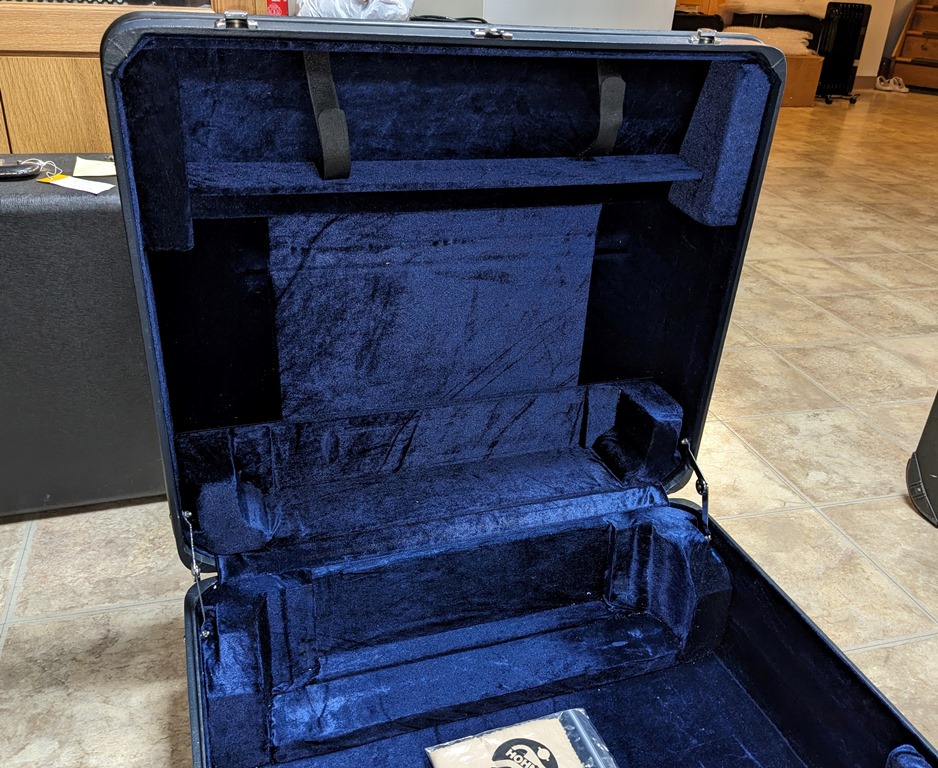
The
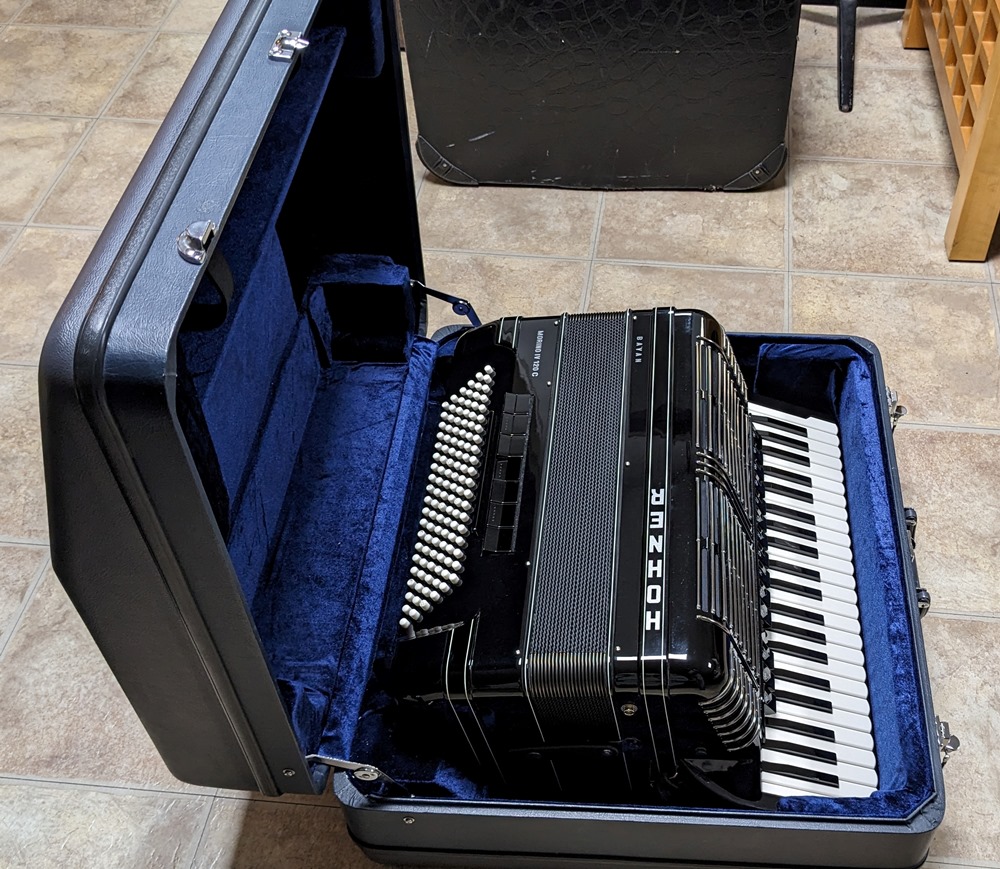
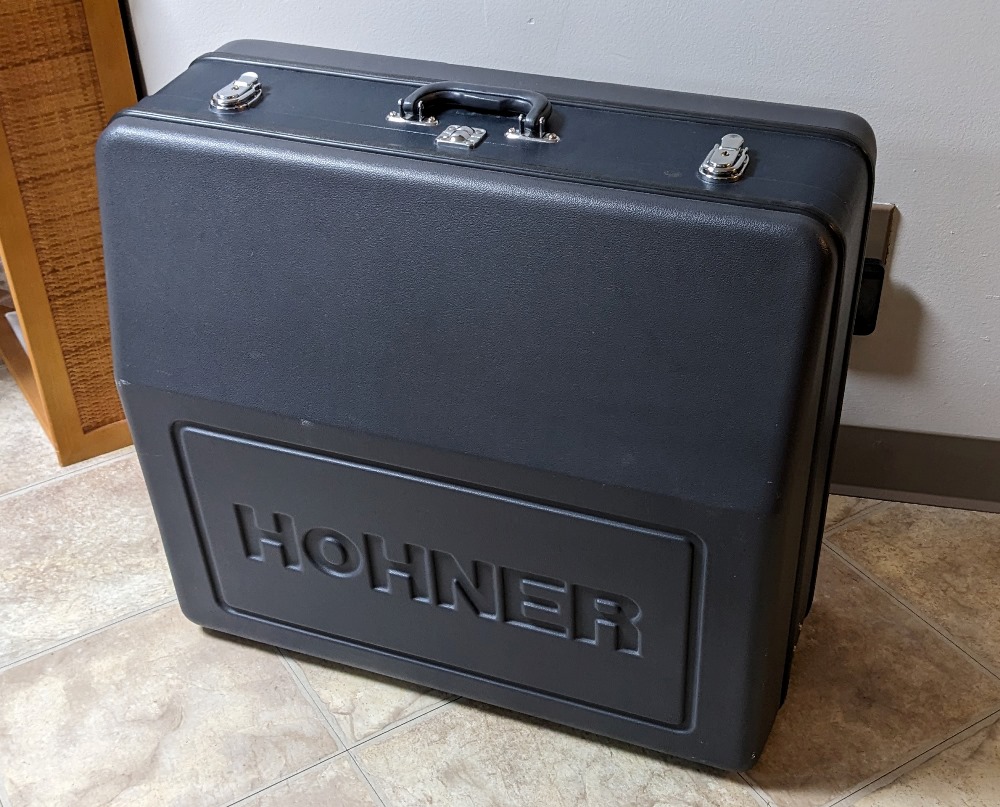
case is a piece
of engineering itself. The interior is custom molded to fit the
accordion perfectly.
Both
the keyboard and bass
machine have a soft touch and fast action.
- Made in Germany
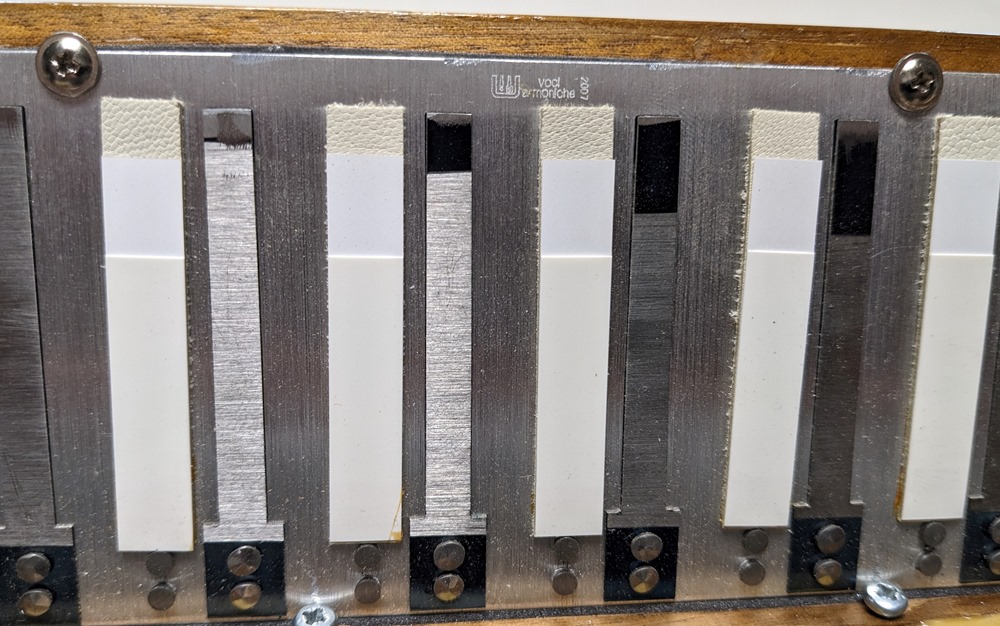
- Excellent Hand Made Voci Armoniche Reeds
- 4 treble sets of reeds - LM1M2H
- Concert Tuned to 440 Hz
- Double Tone Chamber (LM1)
- 45 keys, 21" keyboard E-C5 excellent silent action, a delight to play
- 15 treble switches: Accordion (LMM), Oboe (M1H), Bassoon (L),
Sax (LM2), Piccolo (H), Organ (LH), Clarinet (M), Flute (M2H),
Violin (MM), Harmonium 2 (LM2H), Sopran (M2), Musette (MMH), Harmonium
(LM1H), Master (LMMH), and Bandoneon (LM1)

- 4 Chin Switches that can be configured to select from 8 possible reed
combinations: Bassoon/Organ, Piccolo/Harmonium, Clarinet/Bamdoneon, and
Oboe/Violin
- 120 bass - special extremely silent action
- 7 bass switches
- Converter bass switch
- Stradella and C-System Chromatic Free-bass
- 58 notes range in free-bass E1-C#6
- Low E bass reed configuration retained in Stradella
- Bass decoupling shift - add the high octave Soprano reeds in both
Stradella and free-bass mode
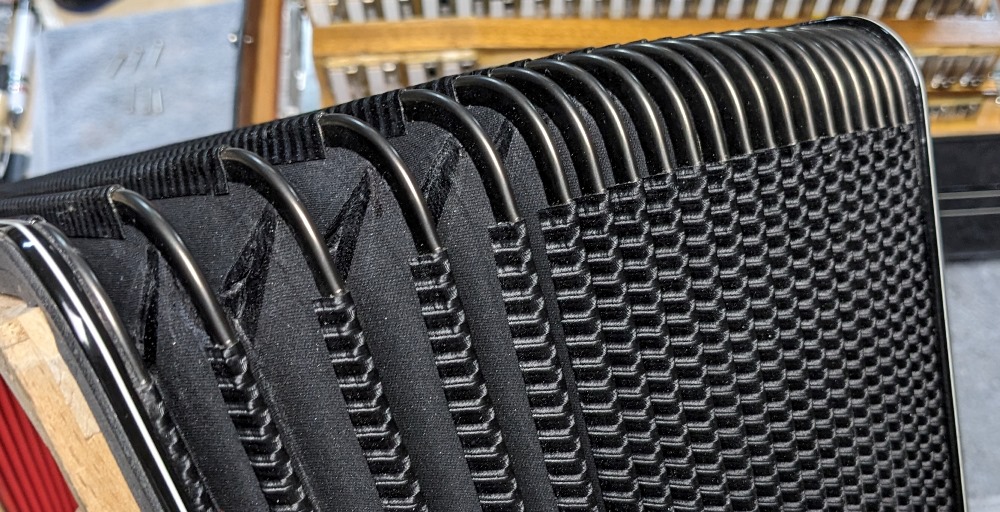
- 19-fold bellows with deep folds and anodized bellows corners - you
will never run out of volume
- 33-34 lb - large, yet well balanced accordion
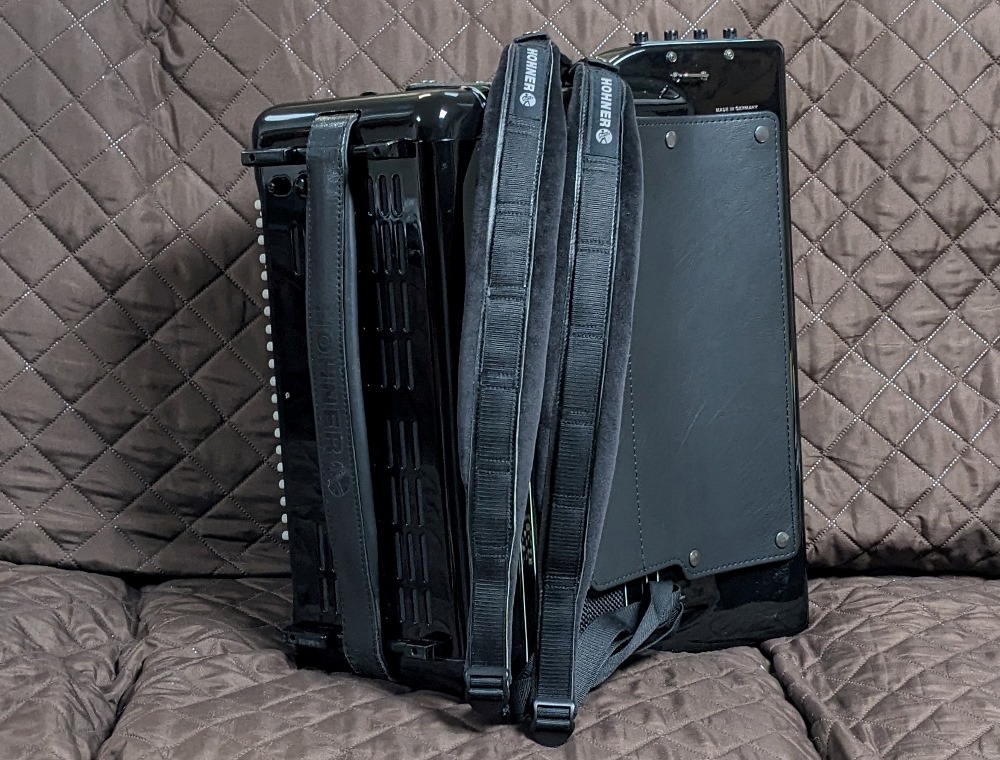
- Excellent original bellows protector and straps
- Impressive custom-designed case
This limited edition custom-built
accordion is virtually new and comes with two years warranty
serviced at the Accordion Gallery in Flemington, NJ. Call
973-219-9259 with any questions.
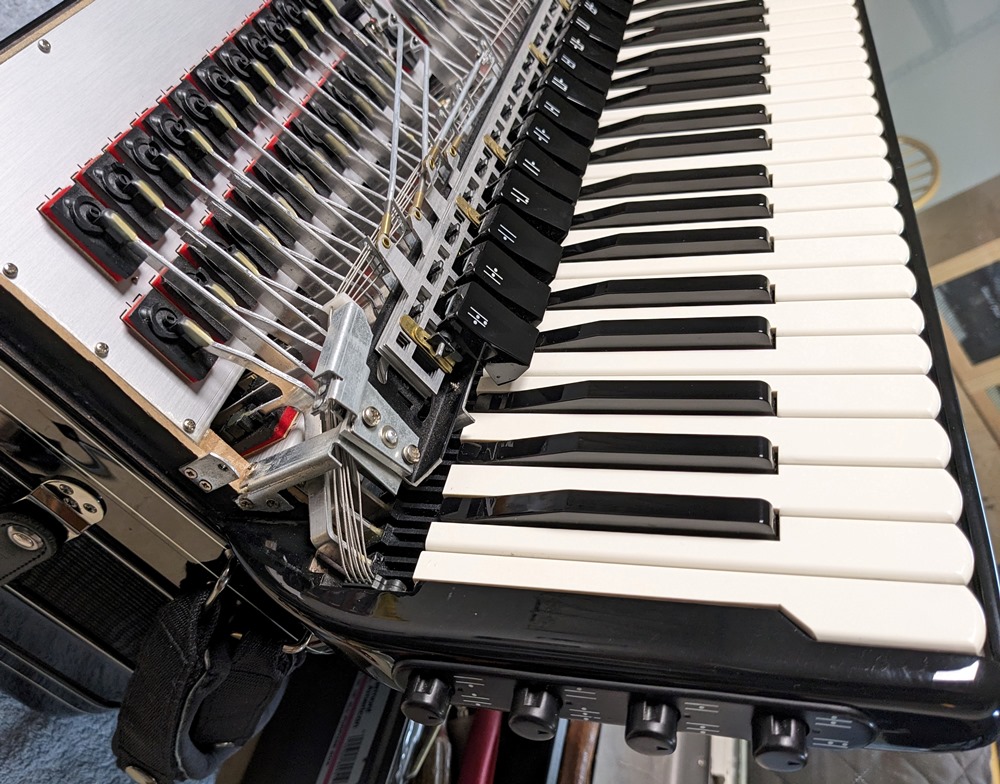
Each of the 4 chin
switches has 3 positions. The central one as shown in the picture below
locks the switch, so it can't be pressed down. Rotating the buttons
counterclockwise gives you access to Bassoon, Piccolo, Clarinet, and
Oboe sounds. Rotating the buttons clockwise you can select from Organ,
Harmonium, Bandoneon, and Violin. Depending on the piece of music you
will know which switches you need and can preset the chin switches
accordingly. For example, if you will need Organ, Harmonium, Clarinet,
and Oboe you can rotate the first two buttons clockwise and the second
two button counterclockwise in the beginning of your performance. Now
you have the desired selection of chin switches.
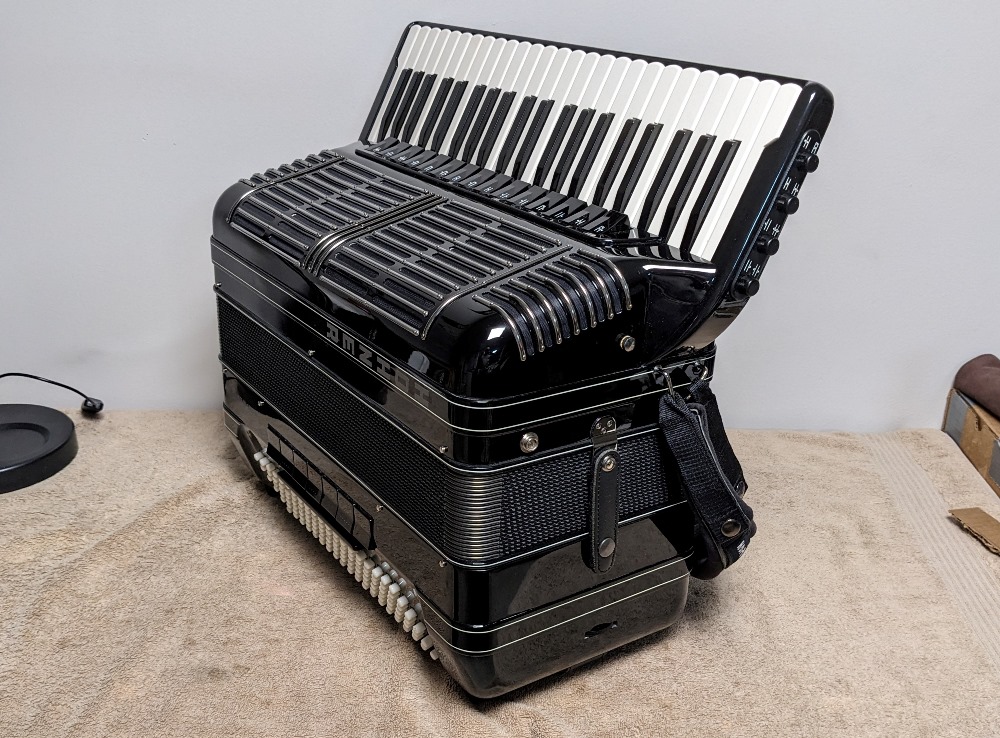
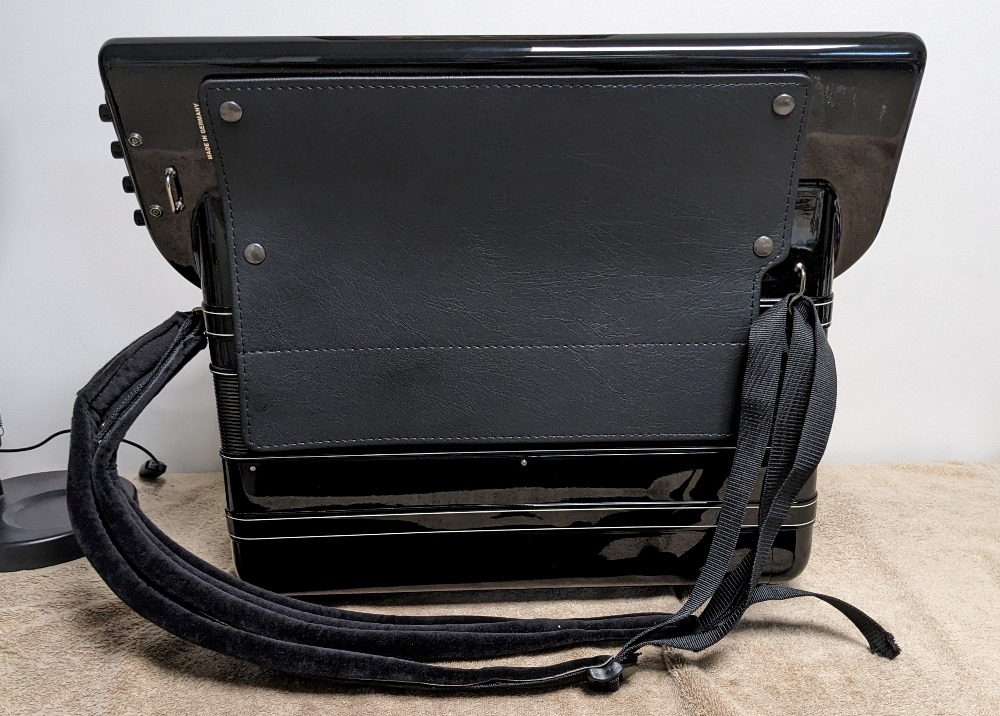
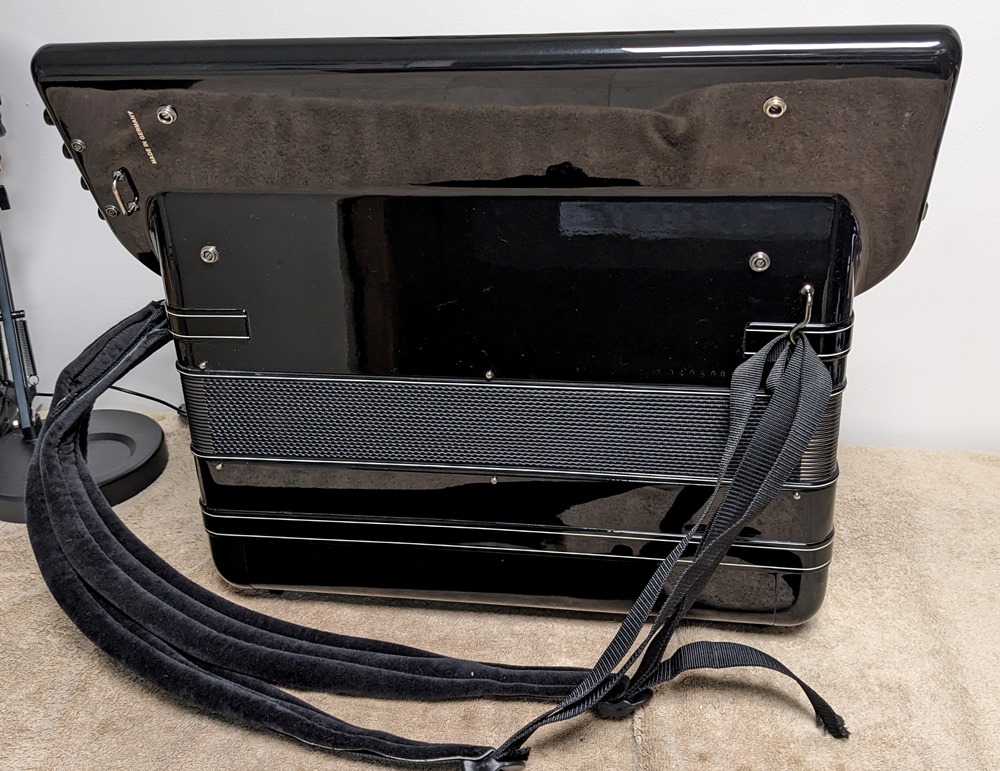
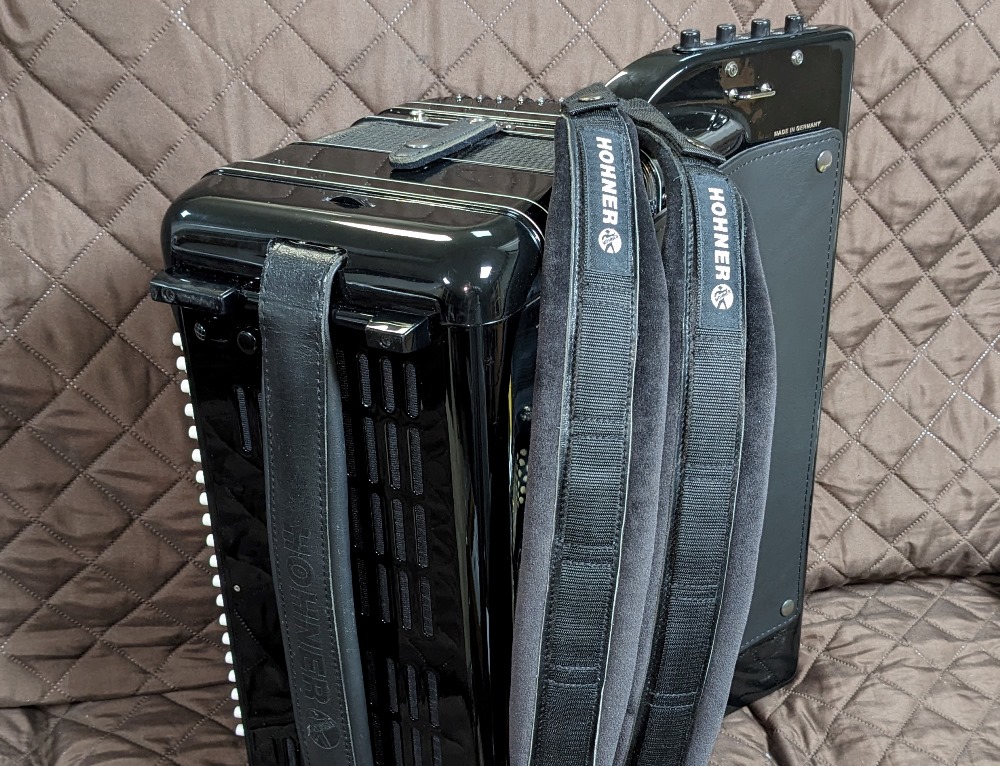
There is an additional
hook for the right shoulder strap mounted on the back of the keyboard.
This allows the performer to experiment with straps position and size to
optimize the balance and control of the instrument.
The straps are very
comfortable, yet very light and durable.
The shift to the left
of the air valve button allows you to couple or decouple some of the
bass valves. When shifted forward (toward the bass buttons) you add the
highest octave soprano reeds to the sound (if enabled by the selected
bass switch). Shifting the button toward the air valve button removes
the higher octave reeds even if they are "allowed" by the selected bass
switch. You would use this option when you need more depth or only the
LM reeds in free-bass. In that case you will have the classic L, M, and
LM free-bass switches. If you need a little more brightness or richness,
move the valve decoupling shift forward and now you have LH, MH, and LMH
free-bass options. There are many possibilities and sound combination.
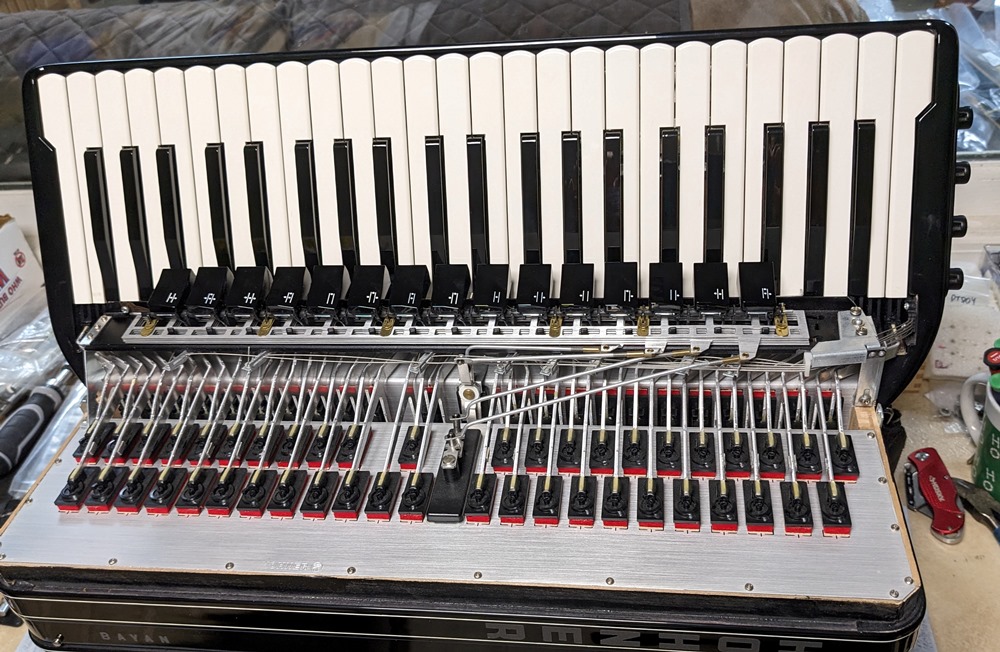
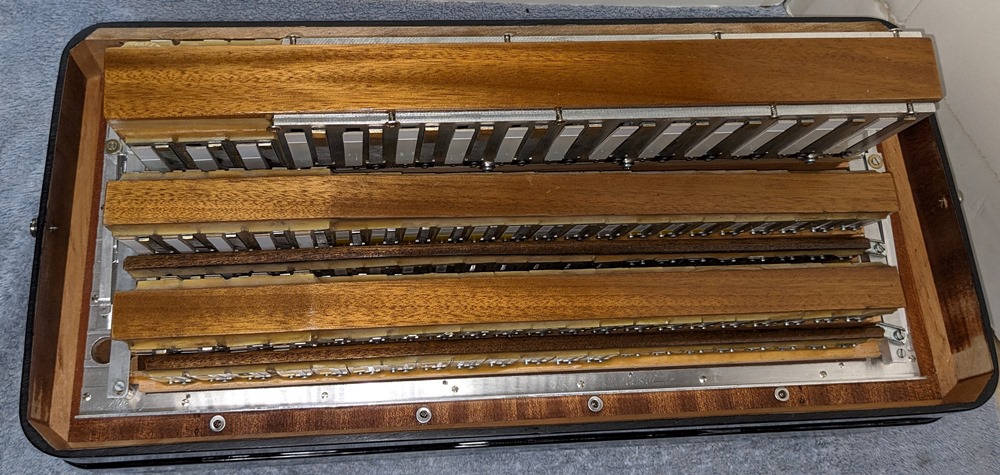
Let's explore the
interior of this marvelous piece of engineering...
I have never seen such
a clever design of the chin switches on any Italian or Russian
accordion. The German engineers optimized the design both for
functionality and ergonomics. You don't need the thick key bed and the
extremely complex mechanics of linkages under the keys.
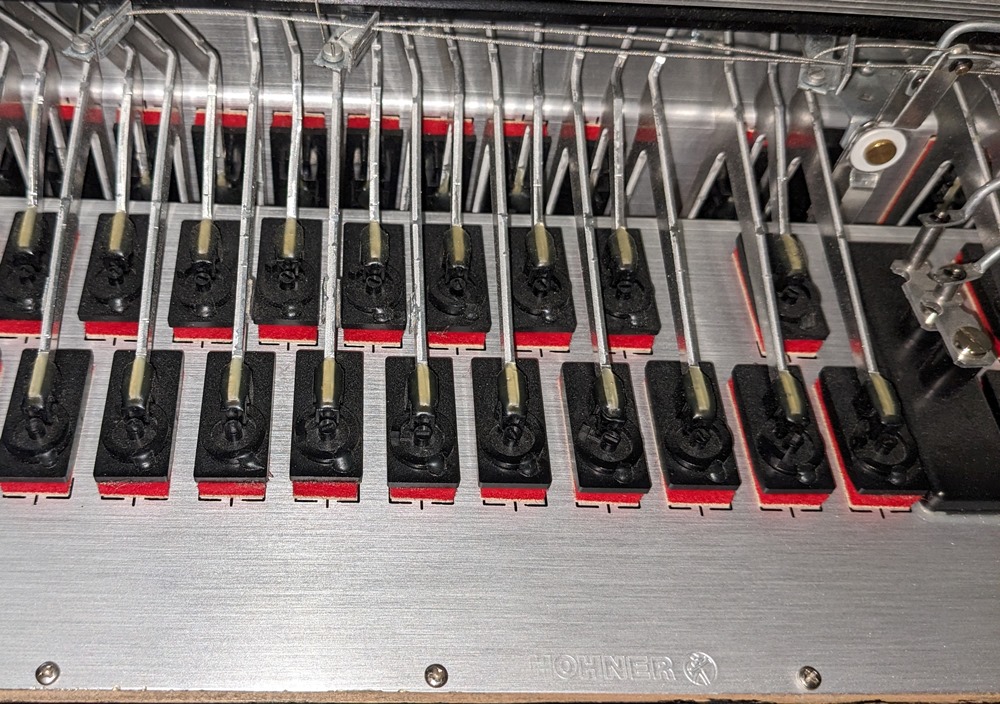
All valves are very
precisely aligned and with optimal pressure for the ultimate compression
the most demanding concert performer would require.
The bellows have been
custom-made with deeper folds, anodized metal corners, and durable
materials for efficient performance and longevity.
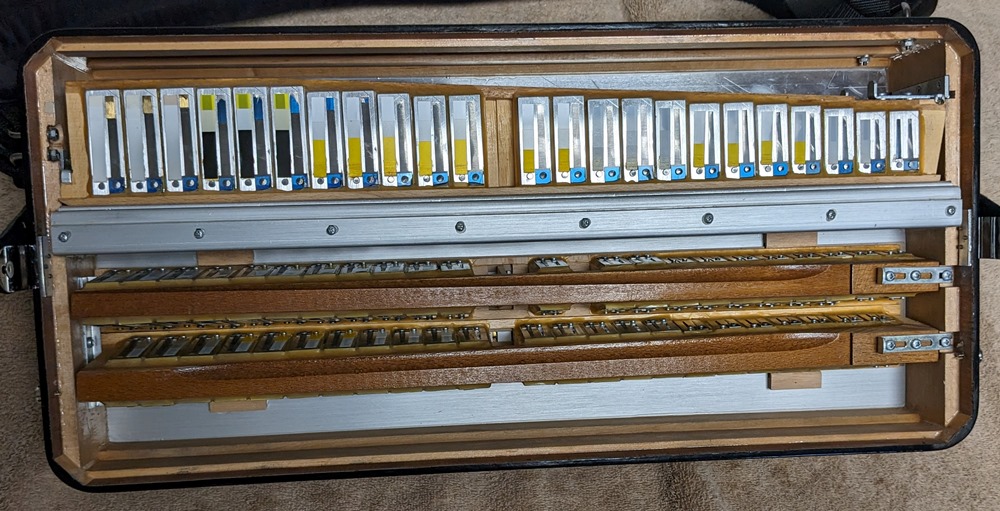
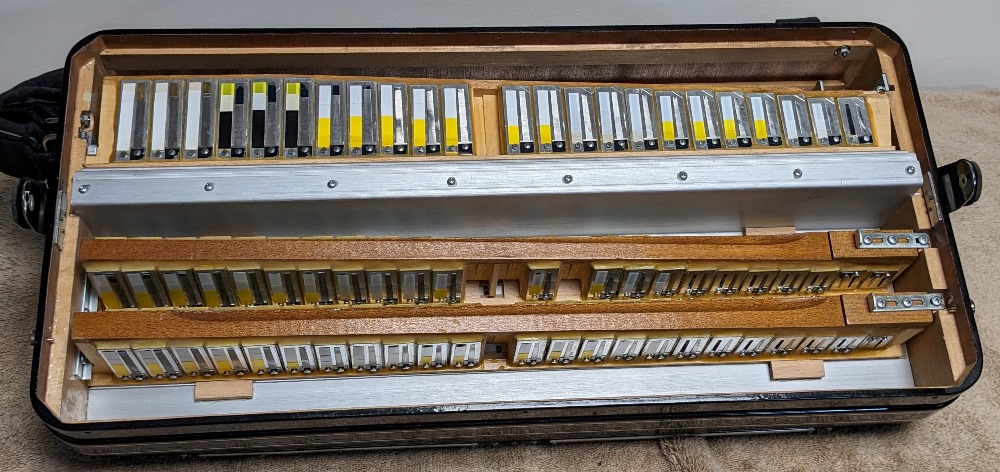
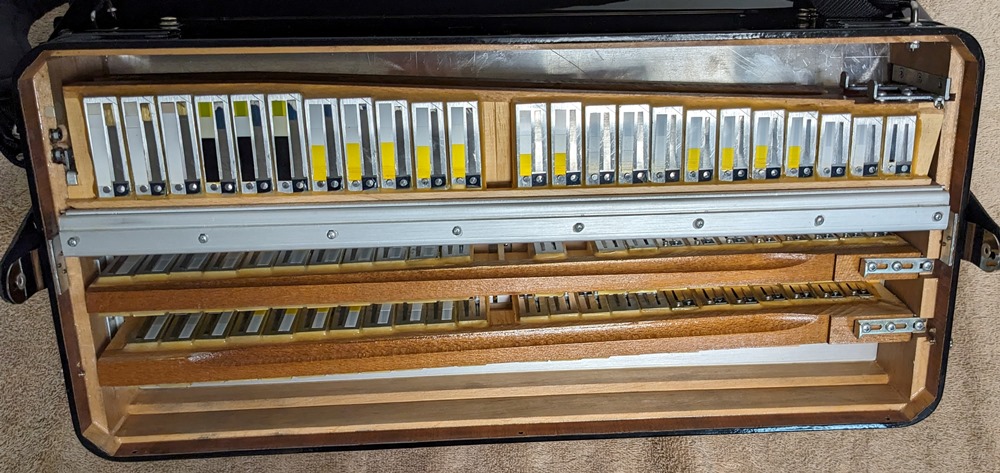
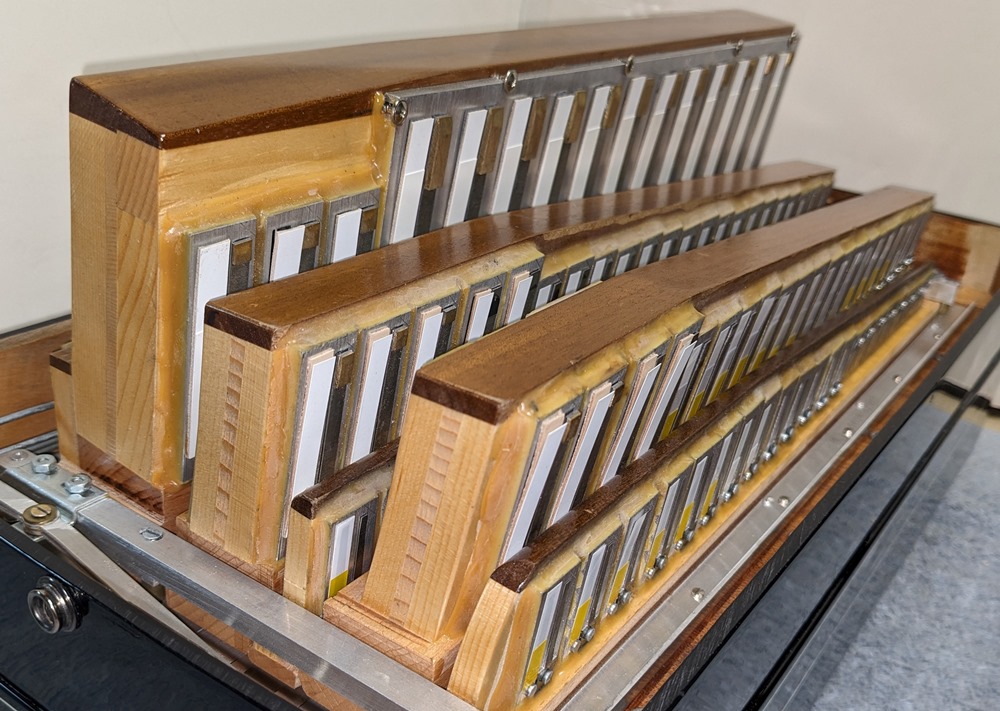
Hohner used hand-made
Italian Voci Armoniche reeds for this instrument.
All reeds are pristine
with the original factory tuning.
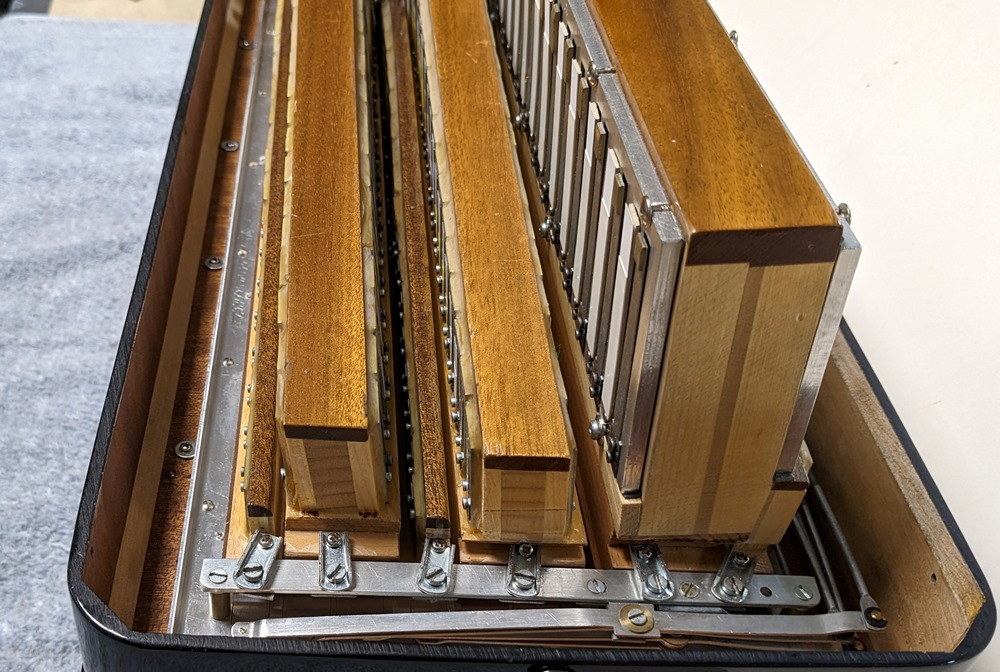
The bass side deserves
admiration!
The lowest two octaves
bass reeds (Bass and Tenor sets) are mounted on shared metal plates like
in the Russian bayans. Italian manufactures (Pigini, Bugari, Scandalli)
have also implemented this method for the top of the line converter-bass
models.
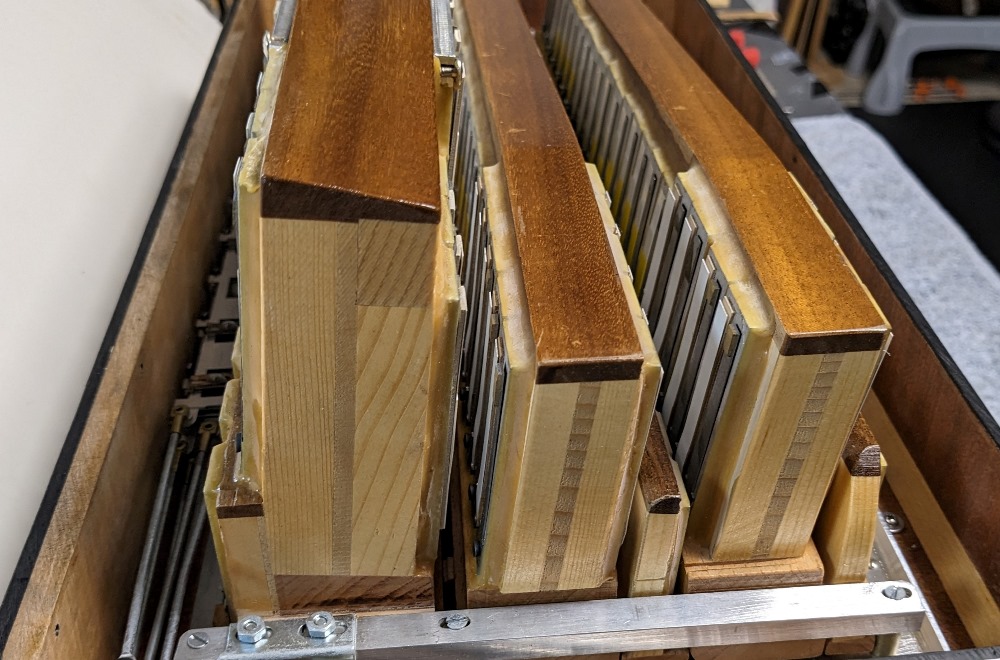
Without disclosing too
much technical and possibly proprietary details I can tell you that the
reed compartments in each reed block have been properly sized for the
air pressure demand of each reed to ensure instant response without
choking or "hesitation".
The case must have
been designed by a dedicated team of engineers and combines functionality with elegance.
It is ergonomically
and structurally optimized to float the accordion in a custom-fit
Styrofoam crate.